
Search Intelligence AI case study: tracking brands in AI search
Codekbyte designed and built Search Intelligence AI for Search Intelligence. See what ChatGPT, Gemini, Google AI Mode and Perplexity say about a brand, then change it.

- Made for
- Search Intelligence
- Contents
- SaaS platform
- Started
- End of 2025
- Destination
- search-intelligence.ai
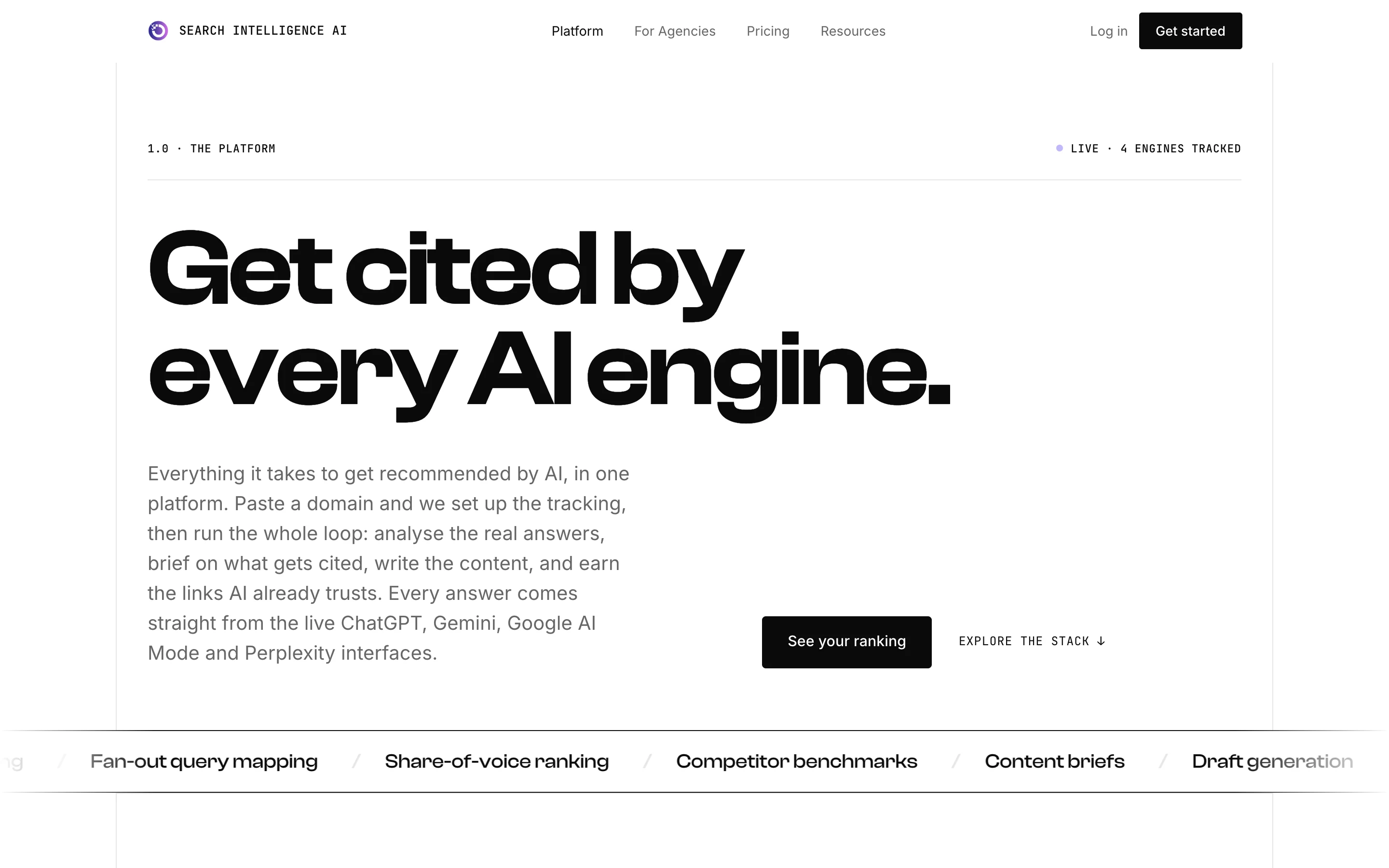
People now ask ChatGPT which product to buy, and the answer names four or five brands. Search Intelligence AI tells a company whether it is one of them. If it is missing, the platform works out what to publish and where to earn links so that it appears next time.
It reads the answers buyers see
Responses come from the live ChatGPT, Gemini, Google AI Mode and Perplexity interfaces. The pricing page explains why: an engine's interface and its API can answer the same question differently, so the product reads the interface.
For every topic it runs 20 related queries. It then re-reads each source the engines cited and records what that page contains, which is how it learns why one page was quoted and another ignored.
One web address to get started
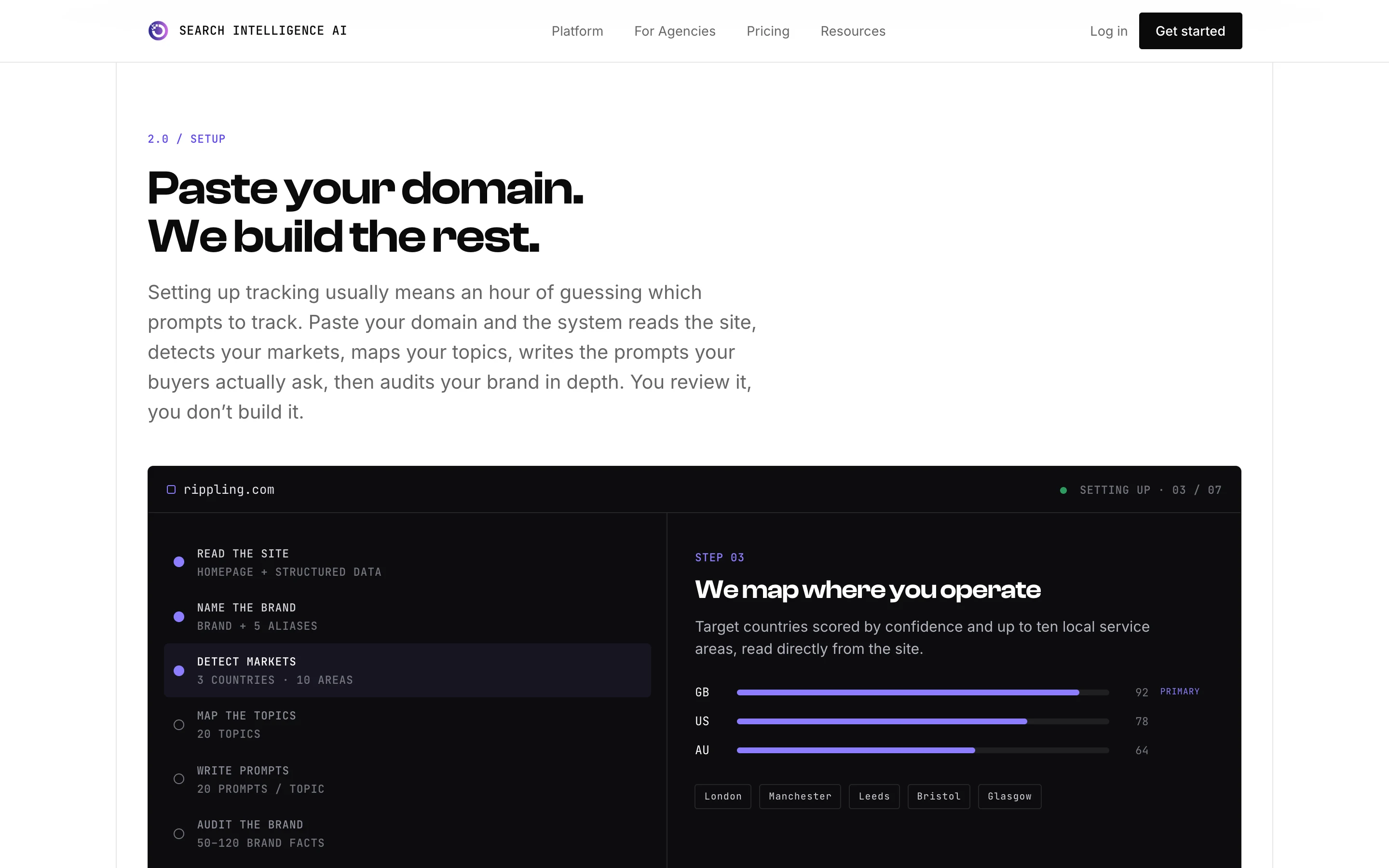
A new customer pastes a domain. The system reads the site, names the brand, detects the countries and towns it serves, maps its topics and writes the questions real buyers would type, 20 for each topic. A research agent then audits the whole site and produces a sheet of 50 to 120 facts, each with its source. Tracking starts when that is done.
The customer reviews the setup instead of building it.
From tracking to published work
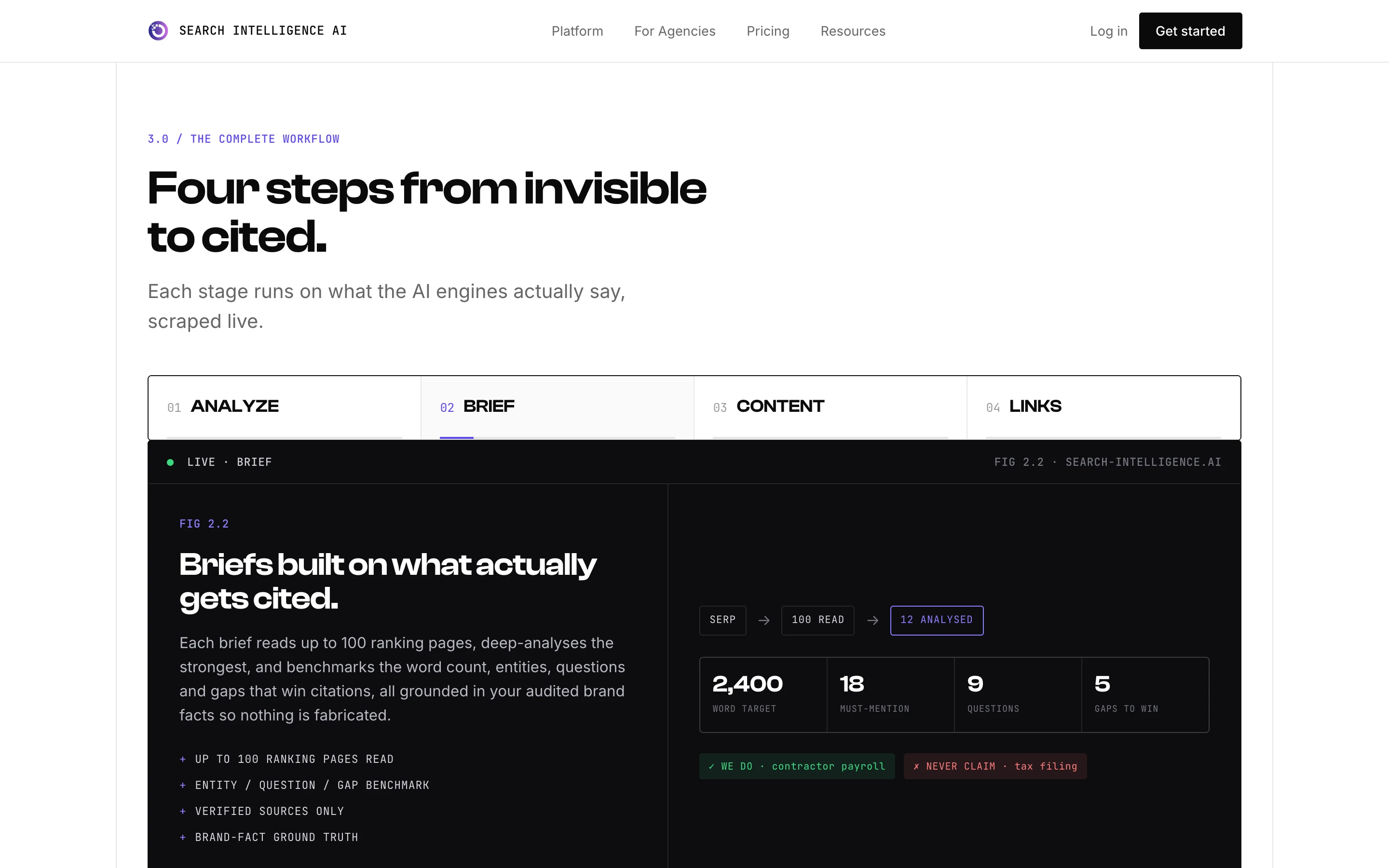
The product is organised as four stages. Analyze shows where the brand stands in each engine. Brief reads up to 100 ranking pages and turns them into an outline with a word target, the points that must be covered and the gaps competitors left open. Content writes the draft, citing verified sources only and holding the brand's voice and spelling. Links ranks the pages AI engines quote most in that industry and marks the ones where rivals are named and the brand is absent.
Reports, Google rankings from Search Console, competitor share of voice and a content calendar sit around those four.
Built for agencies as well
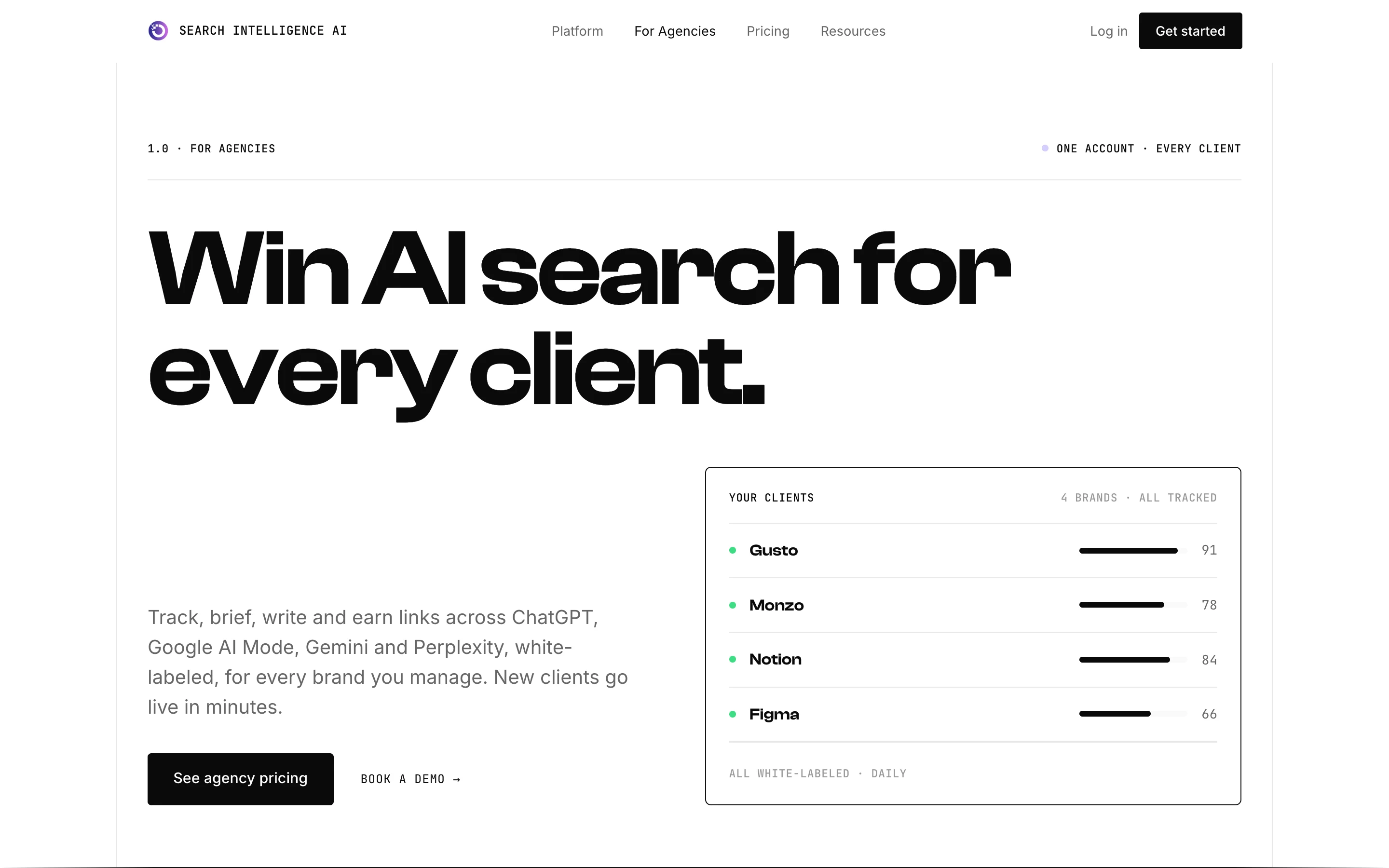
An agency runs every client from one login and sends reports under its own logo. It can also scan a prospect's domain and share the result as a live link, with no account needed on the prospect's side.
It is sold as three subscription plans, from a single brand up to 20 client brands.
Who it was built for
Search Intelligence is a digital PR agency in the UK with more than 250 active clients, by its own count. Codekbyte designed and built this platform for it, starting at the end of 2025.
What we built
Codekbyte designed and built the whole product: the interface, the application behind it and the AI features. The details below describe the product as it runs today. The services page covers the kinds of work involved.
Setup from a single domain
Paste a web address and seven automated steps follow: the system reads the site, names the brand and up to five aliases, detects its countries and local areas, maps 20 topics, writes 20 buyer questions per topic, audits the brand and starts tracking.
Answers read from the live interfaces
Responses are collected from the ChatGPT, Gemini, Google AI Mode and Perplexity interfaces buyers use. For each topic the platform runs 20 related queries, then re-reads every source the engines cited.
Content briefs built from cited pages
Each brief reads up to 100 ranking pages, analyses the strongest in depth, and sets the word count, the entities to mention, the questions to answer and the gaps to fill. Internal links are mapped from the site's top 200 pages.
Article drafts that cite verified sources
The brief becomes a full draft in the brand's voice and local spelling. Guardrails remove invented statistics, filler and fake update dates.
Link targets ranked by AI citations
The platform ranks the pages AI engines cite most in an industry, shows where competitors are named and the brand is missing, and traces each target back to the prompts that produced the citation.
Brand audit by a research agent
An autonomous agent reads the whole site, including pages left out of the sitemap, and builds a sheet of 50 to 120 source-cited facts. Every brief and draft is checked against it.
White-label reports for agencies
Agencies run every client from one login and share reports under their own logo. A prospect's domain can be scanned and sent as a live report link that needs no account.
Google rankings alongside AI visibility
Search Console data sits next to the AI tracking, with keyword cannibalisation and quick-win analysis, competitor share of voice, sentiment per citation and a content calendar.
Figures from the product's own site
Published on search-intelligence.ai and quoted as they appear there.
- AI answers analysed, per the live counter on 5 October 2026
- 279,895
- Ranking pages read for each content brief
- Up to 100
- Source-cited brand facts per audit
- 50 to 120
- Queries run per topic
- 20
- AI engines tracked
- 4
Screens
Captures of the public product. Select one to open it at full size.
Built with
The technologies Search Intelligence AI runs on today.
- Laravel
- Statamic
- Inertia.js
- Vue
More case studies
The other products we designed and built, each one live.
Tell us what you want built, or which developers your team is missing.
Send an enquiry